Showing posts with label bubbles. Show all posts

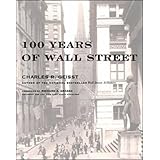
100 Years of Wall Street Review

100 Years of  Wall Street
Average Reviews:

(More customer reviews)
This book, rich with wonderful old photos, gives a concise history of the last 100 years of the financial culture that has come to be known as Wall Street. A good blend of text, photos, and charts make this book interesting to the non-financial reader.
The author divided the book into decades and each chapter outlined the changes that occurred over those years.
At the beginning of the last century, Wall Street was known for its lack of financial regulation regarding trades. Scandals and outright swindles abounded. Four years after the Crash of 1929, FDR's administration passed nationwide banking and securities laws to make sure that this kind of disaster did not happen again.
Unfortunately, the real and distasteful inner workings of Wall Street were revealed in the Senate hearings. An SEC commissioner called investment bankers "financial termites". This knowledge scared investors away for the next 20 years.
In the early 50s, investing became popular with middle class investors for the first time in a generation, and mutual funds were developed after being gone for 30 years.
The 60s brought the birth of the modern mergers and acquisitions business in the U.S, and the days of small brokerage firms were coming to an end.
The 70s brought extensive reforms concerning commissions while the 80s were the years of junk bonds, insider trading scandals, and the savings and loan crisis.
The author called the 80s the decade of greed and the 90s the decade of boom. The Internet has brought about a totally new way of trading stocks and has made up-to-the-minute financial news available to everyone.
The changes in the last 100 years on Wall Street have been phenomenal, mirroring the technological changes in our society.

Click Here to see more reviews about: 100 Years of Wall Street


Buy NowGet 34% OFF

Click here for more information about 100 Years of Wall Street

Read More...

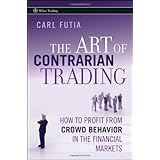
The Art of Contrarian Trading: How to Profit from Crowd Behavior in the Financial Markets (Wiley Trading) Review

The Art of Contrarian Trading: How to Profit from Crowd Behavior in the Financial Markets (Wiley Trading)
Average Reviews:

(More customer reviews)
The author puts tremendous weight on using popular media headlines to gauge whether a bullish or bearish crowd has emerged and/or predominates. However, this no long works. The author himself states that determining whether the sentiment is bullish or bearish through the media has not worked after the tech bubble burst in 2001. Perhaps this is due to the incredible speed and fickle nature of print media, CNBC talking heads, and bloggers in the modern era. It's no longer slow, old-fashioned print media.
If you follow his method, you have a choice of (1) not being fully invested at the bottom of the bear market and missing an upswing (his conservative contrarian method) or (2) jumping in during sizeable pullbacks with the risk of trying to catch a falling knife and getting burned (his aggressive contrarian method). HOWEVER, the author also says that the worst mistake of the contrary investor is not being fully invested when there is a bull market, especially in the earliest stages (as the bear market turns very unexpectedly and abruptly skyrockets). This is a contradiction in philosophies. Also he even states that the "aggressive contrarian" got wiped out by this method during the Great Recession of 2008.
Overall, the author suggests some bizarre combination of momentum trading, using old fashioned market technicals, keeping your pulse on the media, and then breaking the rules you set up because they don't really work anymore.

Click Here to see more reviews about: The Art of Contrarian Trading: How to Profit from Crowd Behavior in the Financial Markets (Wiley Trading)


Buy NowGet 30% OFF

Click here for more information about The Art of Contrarian Trading: How to Profit from Crowd Behavior in the Financial Markets (Wiley Trading)

Read More...