Showing posts with label banking. Show all posts

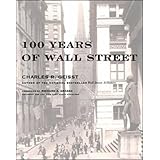
100 Years of Wall Street Review

100 Years of  Wall Street
Average Reviews:

(More customer reviews)
This book, rich with wonderful old photos, gives a concise history of the last 100 years of the financial culture that has come to be known as Wall Street. A good blend of text, photos, and charts make this book interesting to the non-financial reader.
The author divided the book into decades and each chapter outlined the changes that occurred over those years.
At the beginning of the last century, Wall Street was known for its lack of financial regulation regarding trades. Scandals and outright swindles abounded. Four years after the Crash of 1929, FDR's administration passed nationwide banking and securities laws to make sure that this kind of disaster did not happen again.
Unfortunately, the real and distasteful inner workings of Wall Street were revealed in the Senate hearings. An SEC commissioner called investment bankers "financial termites". This knowledge scared investors away for the next 20 years.
In the early 50s, investing became popular with middle class investors for the first time in a generation, and mutual funds were developed after being gone for 30 years.
The 60s brought the birth of the modern mergers and acquisitions business in the U.S, and the days of small brokerage firms were coming to an end.
The 70s brought extensive reforms concerning commissions while the 80s were the years of junk bonds, insider trading scandals, and the savings and loan crisis.
The author called the 80s the decade of greed and the 90s the decade of boom. The Internet has brought about a totally new way of trading stocks and has made up-to-the-minute financial news available to everyone.
The changes in the last 100 years on Wall Street have been phenomenal, mirroring the technological changes in our society.

Click Here to see more reviews about: 100 Years of Wall Street


Buy NowGet 34% OFF

Click here for more information about 100 Years of Wall Street

Read More...

Interest Rate Markets: A Practical Approach to Fixed Income (Wiley Trading) Review

Interest Rate Markets: A Practical Approach to Fixed Income (Wiley Trading)
Average Reviews:

(More customer reviews)
Interest rate markets is a different book than many published for the rates space as it focuses on intuition. Unlike many rates books on the market, the aim is not to price complex securities, but rather to understand and forecast the movement of liquid rate products such as Treasuries, mortgages and swaps. There are very few equations in the book and the emphasis is on a logical thought process to forming views on rates.
The book starts out with an introduction to the wide range of liquid products traded in the rates space including bonds, swaps, and futures. Once the basics of these products have been described, basic frameworks around taking views on the outright direction of rates is described. This includes both very long term factors as well as short term data releases. After the basic framework is outlined, common types of rates trades are discussed which allow traders to express more specific views. Examples include swap spreads and carry trades which are not discussed frequently in other books. In addition to trades related to underlying securities, the book addresses interest rate options and their place in a rate portfolio. Finally, practical hedging strategies are expanded upon including pros and cons of using empirical methods such as regression.
Overall, I believe this book would be useful to anyone trying to gain a more intuitive understanding of interest rates and fulfills a needed niche in the space of fixed income books which tend to be either very model intensive or very basic in their discussion.

Click Here to see more reviews about: Interest Rate Markets: A Practical Approach to Fixed Income (Wiley Trading)

How to build a framework for forecasting interest rate market movements
With trillions of dollars worth of trades conducted every year in everything from U.S. Treasury bonds to mortgage-backed securities, the U.S. interest rate market is one of the largest fixed income markets in the world.
Interest Rate Markets: A Practical Approach to Fixed Income details the typical quantitative tools used to analyze rates markets; the range of fixed income products on the cash side; interest rate movements; and, the derivatives side of the business.
Emphasizes the importance of hedging and quantitatively managing risks inherent in interest rate trades
Details the common trades which can be used by investors to take views on interest rates in an efficient manner, the methods used to accurately set up these trades, as well as common pitfalls and risks?providing examples from previous market stress events such as 2008
Includes exclusive access to the Interest Rate Markets Web site which includes commonly used calculations and trade construction methods

Interest Rate Markets helps readers to understand the structural nature of the rates markets and to develop a framework for thinking about these markets intuitively, rather than focusing on mathematical models

Buy NowGet 37% OFF

Click here for more information about Interest Rate Markets: A Practical Approach to Fixed Income (Wiley Trading)

Read More...

Vault Career Guide to Investment Banking (Vault Career Library) Review

Vault Career Guide to Investment Banking  (Vault Career Library)
Average Reviews:

(More customer reviews)
This guide provides a general overview of the investment banking industry - all the divisions and opportunities, positions available, salaries, hours, etc. I recommend it to anyone who wants a very honest and straightfoward description of I-banking. This book is great for sparking interest, but further investigation in desired fields is necessary. Aside from the numerous typos and poor editing, the guide has served me well.

Click Here to see more reviews about: Vault Career Guide to Investment Banking (Vault Career Library)


Buy Now

Click here for more information about Vault Career Guide to Investment Banking (Vault Career Library)

Read More...

An Introduction to International Capital Markets: Products, Strategies, Participants (The Wiley Finance Series) Review

An Introduction to International Capital Markets: Products, Strategies, Participants (The Wiley Finance Series)
Average Reviews:

(More customer reviews)
It is actually a good introduction to capital markets. An interesting book for those students who are entering to this complex industry and knowledge field. Dr. Chisholm develops carefully every subjet in an excelent work.

Click Here to see more reviews about: An Introduction to International Capital Markets: Products, Strategies, Participants (The Wiley Finance Series)

Fully revised and updated from the hugely popular first edition, this book is an accessible and convenient one-volume introduction to international capital markets, ideal for those entering or planning to enter investment banking or asset management. As well as serving as an invaluable reference tool for professionals already working in the industry looking to extend their knowledge base it will also benefit all those working in trading, sales and support roles.

Describing how the key products and markets work, who the principle participants are and their overall goals and objectives, Andrew Chisholm provides a thorough overview of the global capital markets. The book covers a wide range of equity, debt, foreign exchange and credit instruments as well as the principal derivative products. In a step-by-step fashion, making extensive use of real world cases and examples, it explains money markets, foreign exchange, bond markets, cash equity markets, equity valuation techniques, swaps, forwards, futures, credit derivatives, options, option risk management and convertible bonds. An extensive glossary also explains concisely many of the ‘jargon' expressions used in the financial markets.

Boasting an international focus, examples are drawn from major international markets around the world. It makes extensive use of numerical examples and case studies to help explain a wide range of cash and derivative products used in the capital markets business. It covers both debt and equity products and includes new material on credit products such as collateralized debt obligations and credit derivative structures; equity fundamental analysis, portfolio theory and convertible bonds. Market data has been fully updated from the first edition and recent events such as the ‘credit crisis' are discussed.

Buy NowGet 49% OFF

Click here for more information about An Introduction to International Capital Markets: Products, Strategies, Participants (The Wiley Finance Series)

Read More...

Derivatives Demystified: A Step-by-Step Guide to Forwards, Futures, Swaps and Options (The Wiley Finance Series) Review

Derivatives Demystified: A Step-by-Step Guide to Forwards, Futures, Swaps and Options (The Wiley Finance Series)
Average Reviews:

(More customer reviews)
I have a copy of the first edition but this is a great update. It starts from basics and is very easy to follow. It then covers a lot of ground, including the more exotic options and products such as CDOs, but always in a very clear way. I would thoroughly recommend the book for anyone who wants to get to grip with financial derivatives.

Click Here to see more reviews about: Derivatives Demystified: A Step-by-Step Guide to Forwards, Futures, Swaps and Options (The Wiley Finance Series)

Derivatives are everywhere in the modern world and it is important for everyone in banking, investment and finance to have a good understanding of the subject. Derivatives Demystified provides a step-by-step guide to the subject, enabling the reader to have a solid, working understanding of key derivative products.
Adopting a highly accessible approach, the author explains derivative products in straightforward terms and without the complex mathematics that underlie the subject, focusing on practical applications, case studies and examples of how the products are used to solve real-world problems. Derivatives Demystified follows a sequence that is designed to show that, although there are many applications of derivatives, there are only a small number of basic building blocks, namely forwards and futures, swaps and options. The book shows how each building block is applied to different markets and to the solution of various risk management and trading problems.
This new edition will be fully revised to reflect the many changes the derivatives markets have seen over the last three years. New material will include a comprehensive history of derivatives, leading up to their use and abuse in the current credit crisis. It will also feature new chapters on regulation and control of derivatives, commodity derivatives, credit derivatives and structured products and new derivative markets including inflation linked and insurance linked products.
Derivatives Demystified is essential reading for everyone who operates in the financial markets or within the corporate environment who requires a good understanding of these important financial instruments.

Buy NowGet 38% OFF

Click here for more information about Derivatives Demystified: A Step-by-Step Guide to Forwards, Futures, Swaps and Options (The Wiley Finance Series)

Read More...

The Big Short: Inside the Doomsday Machine Review

The Big Short: Inside the Doomsday Machine
Average Reviews:

(More customer reviews)
Based on reading Michael Lewis' Liar's Poker and Moneyball, I wondered whether The Big Short would prove to be entertaining and informative. If you've read some of Lewis' books, you might agree that the "entertaining" part would seem to be a reasonably safe bet. It turns out, it is. The Big Short is fast-paced, straightforward, conversational and salty--very much like his earlier works. Indeed, if you didn't know Michael Lewis had written this book, you could probably guess it. It is easy reading and very hard to put down. In short (no pun), The Big Short doesn't disappoint in being entertaining.
In a sense, this book is similar to Moneyball in that Lewis tells his story by following a host of characters that most of us have never heard of--people like Steve Eisman (the closest thing to a main character in the book), Vincent Daniel, Michael Burry, Greg Lippmann, Gene Park, Howie Hubler and others.
How informative is the book? Well, it may seem that Lewis has his work cut out for himself, since the events of the recent financial crisis are already well known. More than that, lots of people have their minds made up concerning who the perps of the last few years are--banks and their aggressive managers, "shadow banks" and their even more aggressive managers, hedge funds, credit default swaps, mortgage brokers, the ratings agencies, Fannie Mae and Freddie Mac, the Fed's monetary policy, various federal regulators, short sellers, politicians who over-pushed home ownership, a sensationalist media, the American public that overextending itself with excessive borrowing (or that lied in order to get home loans), housing speculators, etc. The list goes on--and on. Okay, so you already know this. The defining aspect of this book, however, is that it asks (and answers) "Who knew?" about the impending financial crisis beforehand. Who knew--before the financial crisis cracked open for everyone to see (and, perhaps, to panic) in the fall of 2008--that a silent crash in the bond market and real estate derivatives market was playing out? Indeed, the good majority of this book addresses events that occurred before Lehman's failure in September of 2008. In describing what led up to the darkest days of the crisis, Lewis does a good job helping the reader to see how the great financial storm developed. All in all, this is an informative book.
Interestingly, in the book's prologue, Salomon Brothers alumnus Lewis explains how, after he wrote Liar's Poker over 20 years ago, he figured he had seen the height of financial folly. However, even he was surprised by the much larger losses suffered in the recent crisis compared to the 1980s, which seem almost like child's play now.
For a taste of The Big Short, Steve Eisman was a blunt-spoken "specialty finance" research analyst at Oppenheimer and Co., originally in the 1990s, and he eventually helped train analyst Meredith Whitney, who most people associate with her string of negative reports on the banking industry, primarily from late 2007. Giving a flavor of his style, Eisman claims that one of the best lines he wrote back in the early 1990s was, "The [XYZ] Financial Corporation is a perfectly hedged financial institution--it loses money in every conceivable interest rate environment." His own wife described him as being "not tactically rude--he's sincerely rude." Vinny Daniel worked as a junior accountant in the 1990s (and eventually worked for Eisman), and he found out how complicated (and risky) Wall Street firms were when he tried to audit them. He was one of the early analysts to notice the high default rates on manufactured home loans, which led to Eisman writing a 1997 report critical of subprime originators. Michael Burry (later Dr. Michael Burry) was, among other things, a bond market researcher in 2004 who studied Warren Buffett and Charlie Munger, and who correctly assessed the impact of "teaser rates" and interest rate re-sets on subprime loans. In 2005, Burry wrote to his Scion Capital investors that, "Sometimes markets err big time." How right he would be.
Greg Lippmann was a bond trader for Deutsche Bank, who discussed with Eisman ways to bet against the subprime mortgage market. Before home prices declined, he noted, for example, that people whose homes appreciated 1 - 5% in value were four times more likely to default than those whose homes appreciated over 10%. In other words, home prices didn't need to actually fall for problems to develop. (Of course, home prices fell a lot.) When Lippmann mentioned this to a Deutsche Bank colleague, he was called a Chicken Little. To which, Lippmann retorted, "I'm short your house!" He did this by buying credit default swaps on the BBB-rated tranches (slices) of subprime mortgage bonds. If that's not a mouthful, read further in the book for a description of Goldman Sachs and "synthetic subprime mortgage bond-backed CDOs." Then there's the AIG Financial Products story, told through the story of Gene Park, who worked at AIG, and his volatile boss, Joe Cassano.
Did I say this book is informative? Here's a bit more: Did you know that a pool of mortgages, each with a 615 FICO score, performs very differently (and better) than a pool of mortgages with half of the loans with a 550 FICO score and half with a 680 FICO score (for a 615 average)? If you think about it, the 550/680 pool is apt to perform significantly worse, because more of the 550 FICO score loans develop problems. Think about how that got gamed.
There's more, but hopefully you've gotten the point. This is a very interesting, entertaining and informative book that accomplishes what it sets out to do. Chances are you'll enjoy it.


Click Here to see more reviews about: The Big Short: Inside the Doomsday Machine


Buy NowGet 45% OFF

Click here for more information about The Big Short: Inside the Doomsday Machine

Read More...

Understanding Wall Street, Fifth Edition Review

Understanding Wall Street, Fifth Edition
Average Reviews:

(More customer reviews)
I thought that the book was well written and very easy to understand. Provides a good historical background of Wall Street and how the markets got started. If I didn't read this book before watching the movie "Wall Street: Money Never Sleeps", then I wouldn't understand the meaning behind the Dutch tulip craze that Gordon Gekko (Michael Douglas) discusses in the dialogue.
Five stars for helping the reader understand Wall Street! Recommended for anyone just starting out in the market.

Click Here to see more reviews about: Understanding Wall Street, Fifth Edition


Buy NowGet 32% OFF

Click here for more information about Understanding Wall Street, Fifth Edition

Read More...

Value at Risk, 3rd Ed.: The New Benchmark for Managing Financial Risk Review

Value at Risk, 3rd Ed.: The New Benchmark for Managing Financial Risk
Average Reviews:

(More customer reviews)
Jorion's Value at Risk (VaR) will almost surely be assigned in the 2009 Financial Risk Manager (FRM) curriculum. Regardless, it is recommended as an excellent introduction to VaR. There is so much confusion about VaR. For example, some continue to think VaR assumes normality. But, simulated VaR (historical or Monte Carlo) methods require no distributional assumption at all; and parametric VaR does not need a normal. Normal is popular for two reasons: (1) it's a fine place to start learning and (2) VaR was born in short-term trading (market risk), arguably the only place is still has a place! Here [...] is a great no-nonsense overview of the three basic VaR approaches.
Jorion's book, like all the others, will need to be updated for the credit crunch. Chapters on stress testing and liquidity risk now seem much too brief (although his review of liquidity risk is among the best you could have found before the crisis). The strength of this book is its accessibility; math is employed but most is within gentle reach.
For FRM candidates, please note that two of the chapters are deceptively brief but they requires significant time to digest: you will need to read Chapter 7 on portfolio analytics and Chapter 11 on VaR mapping more than once. I promise you 7 and 11 will require lots of your time!
Also, another thing about Jorion that I've learned over the years, as I've taught risk: he is careful and precise with language (without pedantry), which makes him among the best authors in the curriculum. My only criticism of the book is its topical ambition: in trying to cover too many topics, he only flirts with several to insufficient impact.
My notes:
Chapters 1, 2, 3 on the motivation for VaR will need to be updated (e.g., Basel II)
Chapters 4 and 5 setup the introduction to generic VaR approaches; i.e., simulation backward (historical), forward (Monte Carlo), or parametric. But the EVT intro is insufficient.
Chapter 6 (backtesting) is recommended because it explains the Basel IMA backtesting in the context of Type I/Type II error trade-off
Chapter 7 is typically assigned in the FRM. It needs more than one read, due to high density, but it's very sharp. Explains incremental VaR, marginal VaR, component VaR and their relationships (and to portfolio beta). Pays dividends if you spend effort.
Chapter 8 is too ambitious (multivariate models). It doesn't succeed in explaining PCA. But instructive example on risk factors in bond portfolios.
Chapter 9 is about GARCH(1,1) and EWMA. John Hull's chapter is on this is better.
Chapter 10 gives pros/cons on the three VaR approaches. Fine, but will needs to be updated.
Chapter 11 is about VaR mapping. It has typically been assigned in FRM. Time consuming but ultimately does introduce mapping.
Chapter 12 on Monte Carlo doesn't succeed. Ends up being a checklist.
Chapter 13 on liquidity risk is excellent, in my option (e.g., plain discussion of endogenous/exogenous factor treatment), given that it used to be hard to find coverage of this topic. GARP should have assigned this chapter. Liquidity risk, of course, is getting tremendous attention. But this remains a great intro.
Chapter 14 on is a high-level overview of stress testing. Needs more detail and an update.
Chapter 15 (Using VaR to Measure and control risk) merely introduces implementation; will need updating.
Chapter 16 (Active risk management) is too ambitious. Ends up merely flirting with economic capital (EC) and EVA.
Chapter 17 (risk budgeting in investment management) has been assigned in the FRM. It reviews a method for calculating surplus at risk (SaR); i.e., VaR for a pension fund.
Chapter 18 (credit risk) has not historically been assigned to FRM, but this is recommended for the accessible introduction to counterparty exposure (e.g., diffusion and amortization effects).
Chapter 19 is also a helpful introduction to operational risk, where the Basel OpRisk discussion remains relevant.

Click Here to see more reviews about: Value at Risk, 3rd Ed.: The New Benchmark for Managing Financial Risk


Since its original publication, Value at Risk has become the industry standard in risk management. Now in its Third Edition, this international bestseller addresses the fundamental changes in the field that have occurred across the globe in recent years. Philippe Jorion provides the most current information needed to understand and implement VAR-as well as manage newer dimensions of financial risk. Featured updates include:

An increased emphasis on operational risk
Using VAR for integrated risk management and to measure economic capital
Applications of VAR to risk budgeting in investment management
Discussion of new risk-management techniques, including extreme value theory, principal components, and copulas
Extensive coverage of the recently finalized Basel II capital adequacy rules for commercial banks, integrated throughout the book

A major new feature of the Third Edition is the addition of short questions and exercises at the end of each chapter, making it even easier to check progress.Detailed answers are posted on the companion web site www.pjorion.com/var/.The web site contains other materials, including additional questions that course instructors can assign to their students.

Jorion leaves no stone unturned, addressing the building blocks of VAR from computing and backtesting models to forecasting risk and correlations. He outlines the use of VAR to measure and control risk for trading, for investment management, and for enterprise-wide risk management. He also points out key pitfalls to watch out for in risk-management systems.

The value-at-risk approach continues to improve worldwide standards for managing numerous types of risk. Now more than ever, professionals can depend on Value at Risk for comprehensive, authoritative counsel on VAR, its application, and its results-and to keep ahead of the curve.


Buy NowGet 40% OFF

Click here for more information about Value at Risk, 3rd Ed.: The New Benchmark for Managing Financial Risk
Read More...